





A facade in a rainy area: where efflorescence comes from and how to stop it
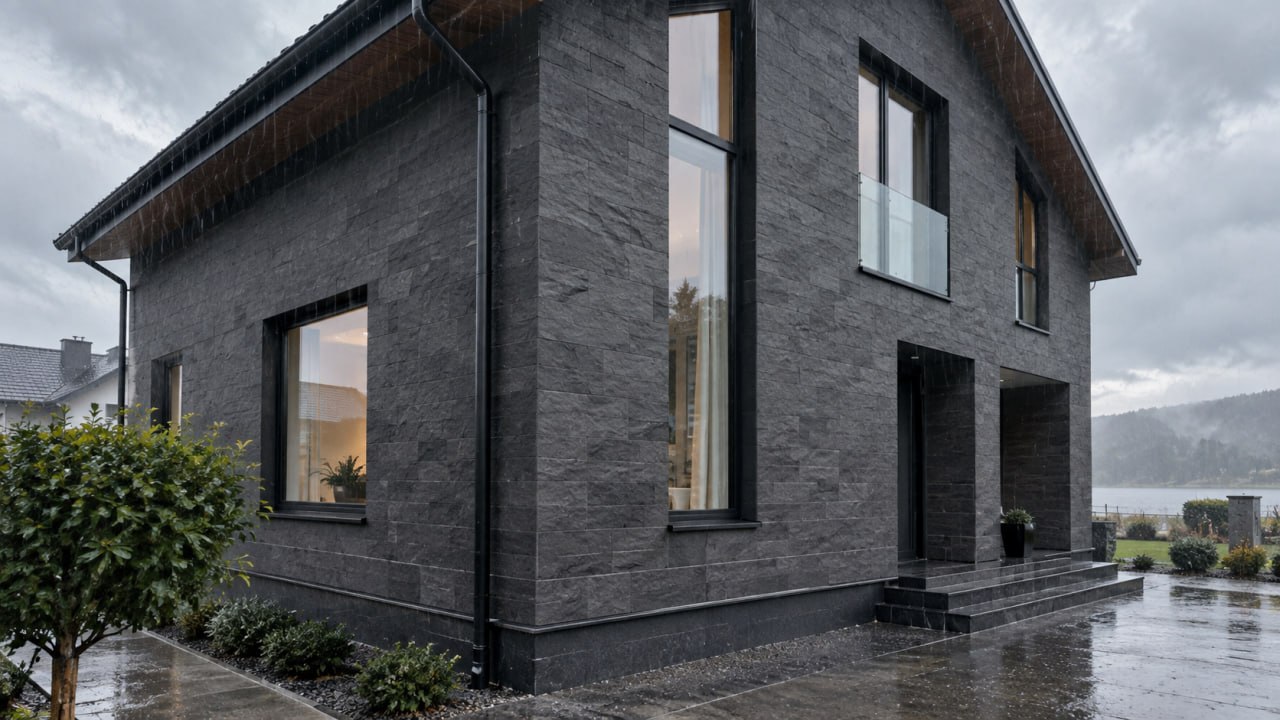
A rainy climate quickly shows how well the facade material was chosen and how correctly the details were executed. If water stays on the walls, gets into the joints or reaches the plinth constantly, the facade starts to darken and to show run-off marks, stains and efflorescence.
Protecting a facade from moisture is not just about an attractive finish. It is a whole system: a correctly prepared substrate, water drainage, sills, drip profiles, plinth, junctions and a final cladding made for outdoor use.
Why does efflorescence appear on a facade?
Efflorescence is the whitish staining that appears on the surface because of moisture and salts. The process is always the same: water gets into the substrate or the vulnerable areas, dissolves the salts in the material, comes to the surface and, once dry, leaves a white deposit.
It appears most often where the facade gets wet regularly:
- near the plinth;
- under sills;
- under downpipes;
- next to cracks and joints;
- on poorly protected edges;
- wherever water stagnates or runs down the wall.
If the source of the moisture is not removed, efflorescence returns even after cleaning.
The main mistake: cleaning the stains instead of stopping the water
Many people simply try to wash the facade. But if water keeps reaching the same places, the problem is back within a season. The source has to be found first.
It is worth checking:
- that water is not overflowing from the gutter;
- that there are no leaks at the joints of the rainwater system;
- that the sills are fitted correctly;
- that drip profiles are in place;
- that water is led away from the plinth;
- that puddles are not forming next to the wall;
- that water is not getting into the junctions.
A facade should not merely withstand rain: it has to let the water leave quickly.
The plinth, the most exposed area
The lower part of the house takes the most: splashes from paths, snow, meltwater, mud and dust. A plinth finished with a weak material or in too light a colour loses its look in the first year.
For the plinth, a practical finish matters: moisture-resistant, not very sensitive to dirt, with a texture that masks the marks of use, easy to maintain and colour-matched to the facade, the roof and the windows. KORDEKO flexible tile (PletaFlex) works well here: it gives the look of natural stone and suits the facade, the plinth, the entrance area and the corners.
Sills and drip profiles: small details, big problems
A badly fitted sill does not lead water outwards — it sends it back towards the wall. If the drip profile is missing, water "clings" to the lower edge and runs down the facade.
That is how water marks under windows, damp patches, dirty streaks, efflorescence and deteriorating junctions appear. A correct sill slopes outwards, projects far enough and has a drip edge. A simple detail that prevents problems which otherwise accumulate for years.
Junctions: where water finds the weak points
Rain rarely damages the middle of a flat wall. Water gets in through the details: the junction with the window, the transition to the plinth, the joint with the cornice, the entrance area, the balcony or terrace, the areas around pipes and the external corners.
If these areas are executed without a solution planned in advance, gaps, micro-cracks, damp areas and efflorescence appear. Junctions are planned before the finish, not repaired after the stains appear. That is why correct installation of flexible tile starts with the details, not with the large surfaces.
Why substrate preparation matters
Moisture-resistant cladding is not installed on a weak, wet or crumbling surface. Existing problems in the substrate show through the finish sooner or later.
Before installation, check for old efflorescence, detaching render, permanent damp, whether the surface is strong enough, whether the primer is chosen correctly and whether the substrate is flat enough. If the source of the moisture has not been eliminated, it is too early for a new finish.
A facade over insulation: protection matters even more
When facade insulation is carried out, water becomes dangerous for the whole system. Moisture must not reach the joints, the edges of the insulation or the junctions. The reinforcement, mesh, adhesive, primer, sills, drip profiles and final cladding have to work together.
Window sills, corners, the plinth, the bottom line of the facade, the areas under downpipes, the cornices and the junctions with the terrace and the stairs need particular attention.
How to choose wall cladding for a damp climate
In a rainy region the finish has to be more than decorative. It matters that it is made for outdoor use, resists moisture, cleans easily, does not crack, keeps its colour, suits the plinth and the entrance area and does not overload the insulation system. Construction materials for exterior use are regulated at European level by the Construction Products Regulation, which also sets the requirements related to moisture.
Flexible tile meets these requirements well because it brings three things together: the look of stone, low weight and ease of work on the details — corners, reveals, plinth, entrance area and facade transitions.
Which colours work in areas with frequent rain
In a rainy climate it is better to avoid the extremes. A completely white facade shows dirty water marks sooner, and a very dark one highlights dust, limescale deposits and the marks left after drying.
In practice these perform better: warm grey, grey-beige, natural stone shades, sand, soft graphite and brown-grey. Texture helps mask the small marks of rain and makes the facade livelier. The same logic applies to seaside facades, where salt is added to the damp.
A mini-checklist before the finish
- Water from the roof goes into the rainwater system, not onto the wall.
- The sills have a slope and a drip profile.
- The plinth is protected against splashes and snow.
- The ground around the house slopes away from the wall.
- The junctions with windows and doors are sealed.
- The substrate is dry, sound and primed.
- The final cladding is made for outdoor use.
- There are no areas where water can stagnate or get into the joints permanently.
Conclusion
Efflorescence and damp walls do not appear by chance. The cause is almost always water that stays on the facade, gets into the vulnerable areas or reaches the plinth constantly. Protection starts not with cleaning the stains, but with correct water drainage, sills, drip profiles, substrate preparation and the choice of a durable cladding.
KORDEKO flexible tile helps create a practical facade in damp conditions: the look of stone, protection for the vulnerable areas and a neat finish on the walls, plinth, corners and entrance area.
Frequently asked questions
Why does efflorescence come back after the facade has been washed?
What are the first places to check when damp patches appear?
Which cladding performs well in a climate with frequent rain?
Need advice on your facade?
- ·Get a free consultation for your project
- ·Find out which material suits your facade
- ·We'll answer all your questions and help you choose